Which Components Can Be Induction Hardened?
Most carbon and alloy-steel parts that rotate, slide or carry load can be induction hardened. The main families are automotive parts (gears, shafts, crankshafts, camshafts, axles), agricultural parts (tines, blades, tiller components) and industrial parts (rollers, spindles, bearings, sprockets and dies).
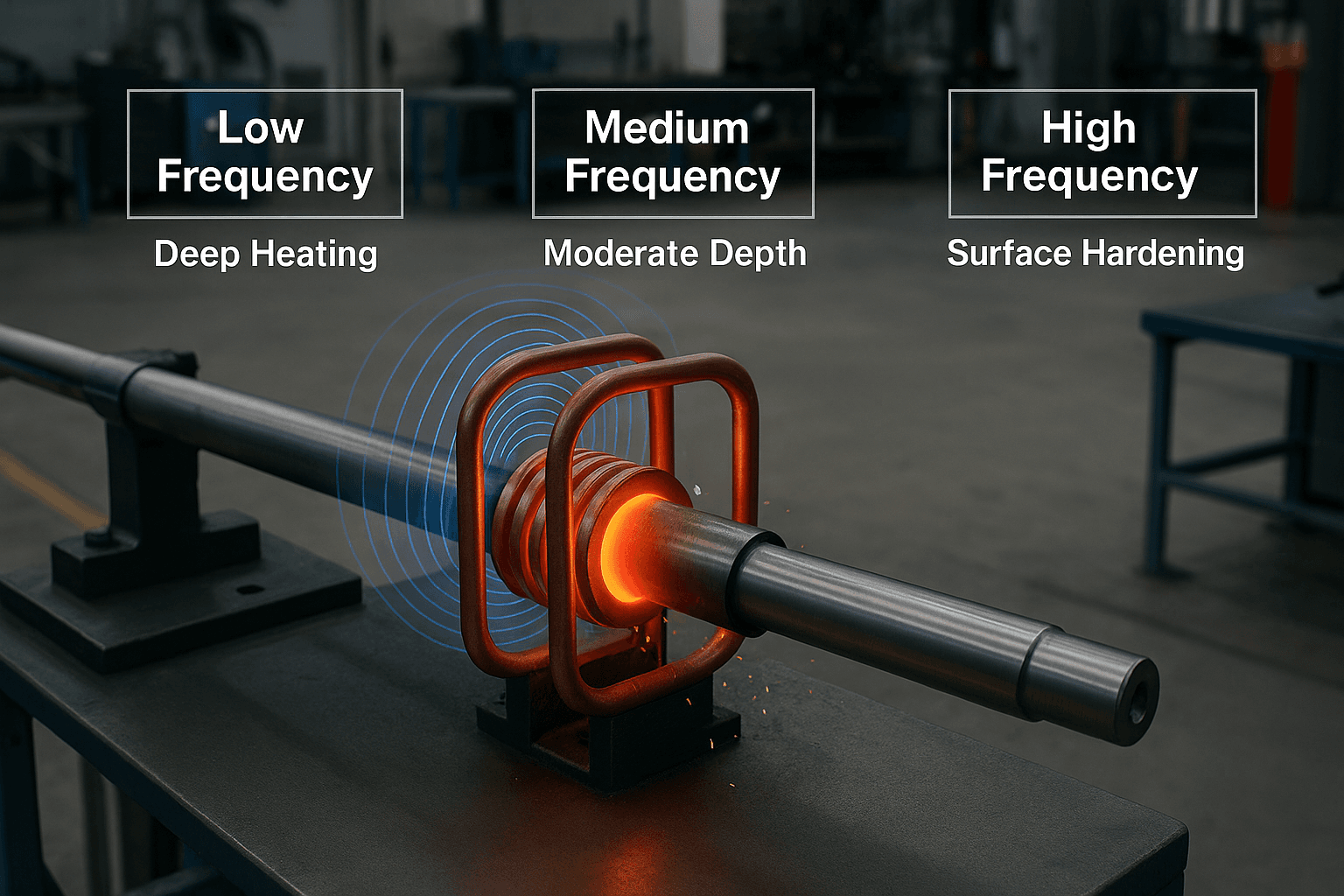
If you manufacture or supply parts in Ludhiana or Punjab, knowing exactly which components can be induction hardened helps you specify the right process, hit the hardness your drawing demands and avoid premature wear. This guide lists the components family by family, with the typical hardness each achieves, and explains which materials respond best.
What components suit induction hardening
Induction hardening selectively heats a steel surface with an electromagnetic coil and quenches it to form a hard martensitic case over a tough core. That makes it ideal for components whose surface wears or fatigues while the core must stay ductile. As a rule, a part is a good candidate when it is made of steel with roughly 0.30 percent carbon or more, has a fairly regular cross-section a coil can wrap or scan, and needs hardness only on specific functional faces. For the full method, see our induction hardening process guide.
The components below are the ones we harden most often, grouped by the industries they serve:
- Automotive: gears, shafts, crankshafts, camshafts, axles.
- Agricultural: tines, blades, tiller parts.
- Industrial: rollers, spindles, bearings, sprockets, dies.
Parts that are not ideal include very low-carbon steels (under about 0.30 percent carbon), thin or highly intricate sections that overheat, and components needing through-hardness rather than a surface case. Low-carbon parts are usually routed to case hardening instead — compare the two in our guide on the difference between induction and case hardening.
Typical hardness by component
The table below summarises common induction-hardened components, the materials they are usually made from, and the typical surface hardness achieved.
| Component | Typical Material | Typical Surface Hardness |
|---|---|---|
| Gears and pinions | EN19, EN24, 20MnCr5 | 55 – 60 HRC |
| Transmission and output shafts | EN8, EN19, 4140 | 52 – 58 HRC |
| Crankshafts (journals) | EN24, 4340, ductile iron | 50 – 58 HRC |
| Camshafts (lobes) | Alloy / chilled cast iron | 50 – 58 HRC |
| Axles and spindles | EN8, EN19, 4140 | 52 – 58 HRC |
| Rollers and rolls | EN8, 9CrV, cast iron | 50 – 60 HRC |
| Sprockets | EN8, EN19 | 52 – 58 HRC |
| Bearing surfaces / races | EN31, 52100 | 58 – 62 HRC |
| Dies and tooling | Tool / alloy steel | 55 – 60 HRC |
| Agricultural tines and blades | EN8, boron steel | 50 – 58 HRC |
Automotive components
Automotive and powertrain parts are the single largest application for induction hardening, because they combine high contact stress with the need for a tough, fatigue-resistant core. Induction lets manufacturers harden only the wear surfaces while keeping the rest of the part machinable and impact-tolerant.
- Gears: tooth flanks and roots are hardened to resist pitting and wear. See our gear hardening service.
- Shafts: bearing journals and splines are hardened for wear and torsional fatigue resistance — explore our shaft hardening service.
- Crankshafts: bearing journals and fillets are induction hardened to survive cyclic bending and rotation. Read more in our crankshaft hardening service.
- Camshafts: the lobes are hardened so the cam profile resists scuffing under valve-train loads.
- Axles and drive shafts: hardened along the bearing diameters and splines for durability under road and torque loads.
These parts dominate the order books of automotive industry suppliers in and around Ludhiana, where tractor, two-wheeler and commercial-vehicle component makers rely on consistent surface hardness for OEM acceptance.
Agricultural components
Farm equipment operates in soil, grit and shock loads, so abrasion resistance is critical. Induction hardening gives agricultural parts a hard cutting or wearing edge while the body stays tough enough to survive impact with stones and roots.
- Rotavator and cultivator tines: the working ends are hardened to resist soil abrasion.
- Blades and shovels: plough shares, harrow discs and cutting blades hold an edge longer.
- Tiller parts: tynes, points and tiller shafts are hardened on their contact surfaces.
Punjab is one of India’s farm-equipment heartlands, and these components form a major share of our agricultural job work. See the parts we treat for the agricultural industry for more detail.
Industrial components
General machinery, machine tools and material-handling equipment use a wide range of induction-hardened components wherever surfaces roll, slide or index against each other.
- Rollers and rolls: conveyor, printing and rolling-mill rolls are hardened for wear-free running surfaces.
- Spindles: machine-tool and pump spindles hardened on bearing and seal diameters.
- Bearings and races: rolling-contact surfaces hardened to high hardness — see our bearing hardening service.
- Sprockets: chain-engaging teeth hardened to resist wear from the chain.
- Dies and tooling: forming and punching faces hardened for tool life.
Because each of these has a different geometry, coil design and scan rate are tailored to the part — which is why induction is favoured for precision industrial work where distortion must stay low.
Suitable materials
Whether a component can be induction hardened ultimately comes down to its material. The steel or iron must contain enough carbon to transform to martensite when heated and quenched.
- Medium-carbon steels: EN8 (080M40) and similar 0.35–0.45 percent carbon grades — the workhorse for shafts, axles and rollers.
- Alloy steels: EN19 (4140) and EN24 (4340) harden deeply and predictably, ideal for gears, crankshafts and heavily loaded shafts.
- Bearing steels: EN31 / 52100 reach the highest hardness for bearing and roller surfaces.
- Cast irons: pearlitic grey and ductile irons with sufficient combined carbon suit camshafts, rolls and machine ways.
- Tool steels: selected alloy tool steels for dies and wear inserts.
Very low-carbon steels (below roughly 0.30 percent carbon) will not harden meaningfully by induction and should be case hardened instead. For broadly recognised best-practice data on hardenability and process selection, the ASM International heat treating resources are an authoritative reference.
Need your components induction hardened in Ludhiana?
Get a quote from Thakur Industries. We induction harden gears, shafts, crankshafts, camshafts, rollers, sprockets, dies and agricultural parts in-house, with polymer and water-based quenching, hardness testing and case depth verification.
Frequently asked questions
Which components can be induction hardened?
Almost any rotating, sliding or load-bearing steel part can be induction hardened, provided it has enough carbon. Common examples include gears, shafts, crankshafts, camshafts, axles, rollers, spindles, bearings, sprockets, dies and agricultural tines and blades.
Can cast iron be induction hardened?
Yes. Grey, ductile and nodular cast irons with sufficient combined carbon (typically a pearlitic matrix) can be induction hardened. Camshafts, rolls and machine ways made of cast iron are routinely surface hardened this way to 45–55 HRC.
What is the minimum carbon content needed for induction hardening?
A steel generally needs around 0.30 to 0.35 percent carbon or more to harden well by induction. Below that the surface will not form enough martensite. Low-carbon parts are better suited to case hardening, which adds carbon to the surface.
What hardness can induction hardening achieve?
Typical results range from about 45 HRC on alloy cast iron to 58–62 HRC on medium and high-carbon steels such as EN8, EN19, EN24, 4140 and 4340. The exact figure depends on the grade, case depth and quench used.
Can Thakur Industries induction harden my components in Ludhiana?
Yes. Thakur Industries provides induction hardening job work in Ludhiana, Punjab for gears, shafts, crankshafts, camshafts, rollers, sprockets, dies and agricultural parts, with polymer and water-based quenching, hardness testing and case depth verification.